
B2B Lead Generation
Find, reach, and convert the right customers with the right process.
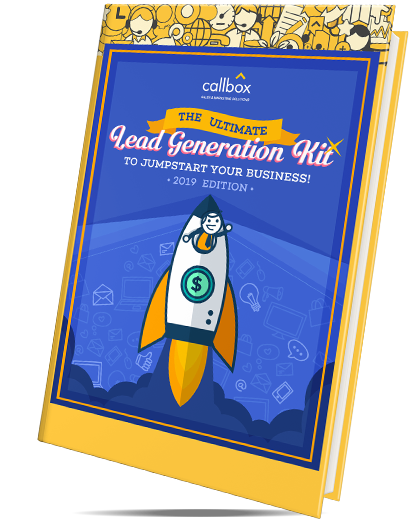
The Ultimate Lead Generation Kit!
Jumpstart your business using the best and latest techniques in Lead Generation.

The customer acquisition process starts with lead generation. Without this crucial step, it’s going to be very difficult to hit your revenue and growth targets. Lead generation is the process of identifying, attracting, and screening potential buyers of your product or service. It entails engaging in actions that draw and capture the attention of your most likely clients. That’s a lot to unpack, so let’s go over the key elements one by one. Lead generation in a B2B scenario requires you to: Don’t worry if these items may not seem very clear to you yet. We’ll expand on each of these points in greater detail below. But first, to make sure we’re on the same page, let’s answer a basic question that’s at the heart of what we’ll learn in this guide: A lead is a qualified prospect with an interest in what you’re offering. A qualified prospect is a decision maker in your target company that meets the job title, industry, role, location, and other demographic/firmographic qualities of your target buyers. The hard part is determining and gauging how much “interest” a contact shows. Keep in mind that both fit and intent will let you screen and classify leads so that you’ll know which ones to prioritize. Again, that’s another crucial topic we’ll talk about in this guide. The short answer is that lead generation allows you to start getting customers the right way. The first step to getting the correct quantity and type of prospects is having a lead generation strategy. It will be quite difficult to achieve your goals without lead generation. Still not convinced? Let’s take a look at the benefits of an effective lead generation process: But how do you make sure that you do lead generation the right way? By making sure your messaging is tailored to what your audience needs and connecting with prospects where they’re actually looking. Speaking of connecting with leads, it’s time to think about another crucial question: exactly where and how do you reach out to prospects? Lead generation channels are what you use to connect with prospects and get your message across to your target audience. Enterprises use an average of eight lead generation channels, while other businesses rely on 3 to 4 channels on average. Lead generation tactics roughly fall into two main categories based on the channels being used: inbound and outbound. Inbound lead generation: This involves creating content and carrying out activities that attract and capture prospects toward the company website or dedicated landing pages. The key idea behind inbound lead generation is to offer something of value to a prospect in exchange for information you can use to move them down the sales funnel. Examples of inbound channels include: Inbound lead generation is all about making your brand or company easier for prospects to find. Its primary goal is to increase your visibility online, since this is where practically all of today’s B2B buyers start their paths to purchase. Outbound lead generation: When you generate leads by proactively reaching out to prospects using targeted, direct channels, you’re doing outbound lead generation. Outbound channels rely on precision and scale to generate leads. They’re all about targeting specific prospects instead of maximizing visibility. These channels include: With a large number of different channels to choose from, B2B marketers often ask which ones to focus on. Should you leverage inbound or outbound lead generation? Today’s B2B buying landscape requires that you find the right mix between both inbound and outbound lead generation: So, instead of choosing one over the other, it’s now all about combining the strengths of inbound and outbound channels. A lead generation plan will help you put all these together, as well as determine how each component fits in the process. Earlier, we saw that lead generation is a sequence of steps for turning contacts into qualified leads. We also learned that lead generation relies on different activities and tactics to work as advertised. But with so many moving parts, lead generation can be hard to carry out and manage. That’s where a solid lead generation plan comes in handy, and here’s how to put one that covers the entire process, from start to finish: The lead generation process starts with knowing what and who you want to reach. Setting smart lead generation goals and targets require completing a thorough and systematic process: We already learned that lead generation is all about attracting and capturing interested prospects. The exact details of this step of the lead generation process tend to become tedious and intricate. But with the right plan, it’s easier to drive interest and awareness: Once a prospect shows interest, the next step is to gather information that helps you figure out the best ways to interact with that particular lead. This typically involves collecting contact, demographic, firmographic, and other details. Not all leads will become customers right away. Some leads need a bit more qualifying and nurturing to help you determine if they’re a good fit for your product or service. The best way to maximize your lead nurturing strategy is to come up with solid workflow that utilizes multiple marketing channels. We put together a guide on how to generate leads using a proven outbound workflow. Lead generation doesn’t end once you’ve handed a lead over to sales or turned a prospect into a customer. Testing is part of the process, too, and it’s done throughout each step of the way. By now, you’re probably thinking that lead generation takes a lot of work. That’s true in many ways, but you and your team don’t have to do everything yourselves. With so many steps and components making up the modern lead generation process, it often makes more business sense for marketers to ask for outside help. In fact, data from Clutch’s Enterprise Marketing Survey shows that as much as 84% of enterprises work with at least one agency for marketing support. That’s because outsourcing all or part of your lead generation efforts helps you: Still, the decision to outsource lead generation needs to be carefully considered since marketers will experience varying degrees of success from it. Here’s a quick comparison: If outsourcing makes more business sense to you, then you need to do your homework and ask the right questions when choosing a lead generation company. Make sure to carefully weigh factors like: With these questions, you will be able to evaluate and determine what makes them best in lead generation services. Now that we’ve set up a lead generation process, we’re done, right? Not yet, there’s still a couple of things we need to put in place. For complex-sale products like many B2B solutions, the lead generation process tends to get very complicated. Enter lead management. Lead management extends your lead generation strategy to account for what happens to leads at later stages in the sales cycle. Since we’ve already learned how to flesh out an effective lead generation plan, developing a lead management program will involve applying the following tweaks to your lead generation process: Effective lead management depends on having clear lead definitions. That’s why one of the first step when building a lead management plan is to revisit your ICP and buyer persona profiles. Whether it’s a tiny piece of prospect detail or a specific action, leads send out clues and signals throughout the sales process that help you gauge how close they are to becoming your customers. Effective lead management means being able to recognize and understand these signals. Lead scoring is one way to make sense of the reams of information you collect about your leads. The lead score summarizes everything you know about a prospect into a single number or value that tells you what buying stage a prospect is in. With the additional data points you’re collecting for lead management, your lead scoring model needs to be modified to take these into account. We found out earlier that we need to set up a lead nurture cadence to handle leads that aren’t yet ready to convert. An effective lead nurturing program syncs up your sales funnel with your prospect’s path to purchase. This means that lead nurturing helps orchestrate all your marketing activities toward delivering the right message to the right prospects right when they need it. The lead handoff is the point in the sales cycle when qualified leads are transferred from marketing to sales. An effective lead management program also includes a well-defined handoff process. Here’s how to help ensure this outcome: There’s no way around it. Modern lead generation is a complicated process with a lot of interdependent parts. That’s why it’s understandable that measuring lead generation performance can be very daunting for most marketers. With different channels and touches, combined with hundreds of data points and thousands of prospects tracked in real-time, B2B lead generation campaigns produce massive amounts of data. So how do you decide which metrics and KPIs to monitor on your dashboard and reports? Use this checklist to find out: Before we conclude this guide, let’s go over some proven tips and best practices to help ensure your lead generation program reaches its goals and objectives. As you can probably guess, it’s not easy to boil something as complicated as lead generation down to a few simple nuggets of wisdom to live by. So, we’ll revisit every key step in the lead generation process and identify what works and what doesn’t for each. Knowing which companies or accounts to target starts with having an ideal customer profile (ICP) to work with. An ICP is a detailed description of companies that stand to gain the most from your offer. This means they’re also the easiest to sell to among all the organizations in your target market. In other words, your ICP serves as both a compass and a filter to help you select high-value accounts and avoid poor-fit companies. Here’s a number of must-know tips for putting together a solid ICP: You’ve probably heard that there’s an average of 6.8 decision makers involved in today’s B2B deals. That’s a lot of decision makers to win over. What’s even more challenging is that each stakeholder has a different role in the purchase process and that each of them requires different messaging. That’s why modern lead generation programs rely on well-defined buyer personas. A buyer persona summarizes the different characteristics of a decision maker. Each stakeholder in the purchase decision is described by at least one buyer persona. Simply put, buyer personas are what you need to accurately pinpoint and segment the right stakeholders to target in your lead generation program. Here’s what you need to keep in mind when building buyer personas for B2B lead generation: Almost two-thirds of B2B marketers say getting enough traffic and leads is their biggest lead generation challenge. That’s mostly because many of them haven’t yet learned to adapt their strategies to the changing B2B buying process. The key to attracting, capturing, and converting the right quantity of leads is to understand how your target prospects actually start their purchase journey. B2B buyers are now up to 70% into the purchase process before reaching out to a vendor. That means they’re spending most of the buying journey on their own. By the time potential leads contact someone in your organization, they’re already about to make up their minds. So what are prospects doing before they show up on your radar? They’re actively researching the problem and studying up on possible solutions. That’s where your inbound lead generation activities are useful. But does that mean you only have to sit back and wait for prospects to come to you when they feel like it? Of course not. You also need to proactively connect with possible leads long before they knock on your doorstep. That’s because 50% of sales go to the vendor that reaches out first. This clearly highlights the importance of outbound channels in lead generation. Keep these proven lead generation tips in mind to make sure your inbound and outbound channels are combined in a way that aligns with the modern buying journey: If the quantity of leads matters in lead generation, the quality of leads is even more important. A full 70% of marketers rank improving the quality of leads as their number-one priority. Lead qualification is the process of screening prospects based on how much they resemble your ideal buyer profile and how much interest they’re showing toward your offer. It’s a way of filtering genuine opportunities from potential dead ends. Just how important is lead qualification? Let’s put it this way: only 3% of the market is actively buying at any given time, while 63% of people currently researching a company will not buy in the next three months. If you treat every single one of those prospects as a potential customer, then you’d end up wasting a huge amount of resources on unproductive leads. A robust lead qualification process requires you to: Of course, this guide wouldn’t be complete if we didn’t take a close look at some of the best tools for doing lead generation today. Technology powers much of what you do in lead generation, so it pays to choose the right tools for your marketing tech stack. There are literally thousands of lead generation apps and platforms available out there. Here’s a few of the top lead generation tools for each channel and activity. A great email marketing tool doesn’t only automate send-outs. It also lets you personalize, segment, and manage your email campaigns. These are the minimum set of features you need to look for when choosing an email marketing tool. Effective email marketing platforms help you gain higher deliverability, minimize spam complaints/bounces, and maintain the health of your list. Some of the highest-rated email marketing tools include: Phone conversations play a new role in today’s lead generation programs: helping reinforcing the connections and responses established in other channels. That’s the primary capability to look for in a phone contact platform. The following are excellent candidates for phone-based lead generation tools: Around three-quarters of B2B buyers use social media to research and evaluate purchase decisions. This makes social media a crucial part of any lead generation program today. But to be an effective component of your lead generation strategy, social media activities need to be carried out and managed using tools that can handle scheduling, engagement, analytics, security, and collaboration: With websites and landing pages at the core of inbound lead generation efforts, it’s only proper to make sure that this part of your marketing program is supported by the best tools for the job. The ideal SEO tech stack provides research, audit, monitoring, and ranking capabilities. It boosts traffic, conversions, and opportunities—similar to what the following tools can help you achieve: As a B2B lead generation channel, PPC marketing works well for offers with long sales cycles, trial periods, gated content, and repeated online touches. The right PPC tool allows you to easily attract leads looking for what you offer, rank highly for relevant queries, target different stages of the funnel, and tailor your messaging accordingly. Examples of PPC tools that let you do this include: Once again, you’re probably asking, with all these tools under your belt, how can you possibly stay on top of the lead generation process? A good lead management/nurturing tool binds every activity and tool involved in your lead generation program. It gives you a single and complete picture of each prospect, lead, or opportunity as they move along the sales funnel. In short, this tool serves as the central hub of your lead generation operations. The best commercially-available lead management/nurturing tools include:
What is B2B Lead Generation?
What exactly is a lead?
Why You Need to Follow a Lead Generation Process
Assists them in finding the information they need
Allows you to promptly adjust to your changing needs
Generates qualified and interested potential clients
Prioritizes building devoted clients in addition to closing deals.
Relies on relevant and focused messaging rather than generalized techniques
Inbound vs. Outbound B2B Lead Generation
How to Build an Effective B2B Lead Generation Plan
Set your goals and refine your target audience
Drive interest and awareness
Capture relevant prospect info
Engage and nurture leads
Test, track, and tweak
DIY vs Outsourced B2B Lead Generation
The B2B Lead Management Process
Refine your ICP and buyer persona profiles
Expand your data collection plan
Enrich your lead scoring model
Map out lead nurture paths across the buying journey
Create a lead handoff plan
Measuring B2B Lead Generation Performance
B2B Lead Generation Tips and Best Practices
Tips for finding best-fit companies and accounts
Tips for identifying relevant decision makers
Tips for attracting and converting leads
Tips for qualifying leads
B2B Lead Generation Tools
Email
Phone
Social Media
SEO
PPC
Lead Management and Lead Nurturing